

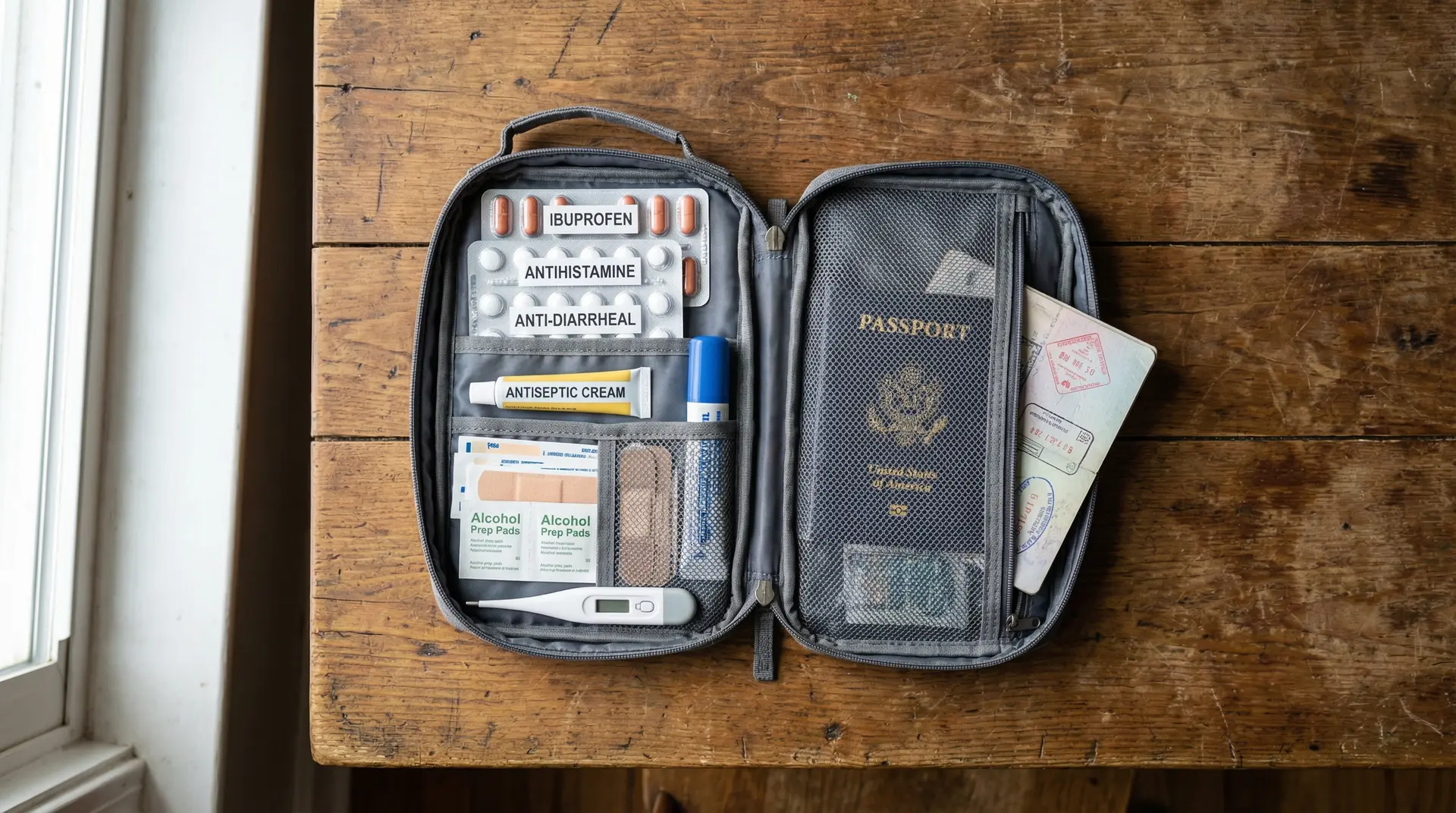
Travel Health: A checklist for your medicine bag before your next safari or trip. Leave a comment
Whether you are planning a breathtaking safari through the Maasai Mara, a business trip to the coast, or an international excursion to explore new horizons, the success of your journey depends heavily on your well-being. There is nothing more disruptive than falling ill while away from home, and while we often focus on packing the perfect wardrobe or camera gear, we frequently overlook the most essential item: your travel medicine bag.
At Intercare Pharmacy, we believe that preparation is the ultimate form of travel insurance. By putting together a thoughtful, well-organized medical kit, you can handle minor ailments on the spot and enjoy your journey with peace of mind. Here is your comprehensive checklist for staying healthy on your next adventure.
1. The Foundation: Personal & Chronic Medication
If you are currently managing any health conditions, your primary focus must be on your existing prescriptions.
- The “Double Up” Rule: Always pack more medication than you think you will need. Carry an extra week’s supply in your carry-on luggage in case of travel delays or lost checked bags.
- Copies of Prescriptions: Keep a copy of your doctor’s prescription and a summary of your chronic medication regimen in your bag. This is crucial if you need to see a doctor or visit a pharmacy in another location.
- Original Packaging: Never transfer pills into smaller, unlabeled containers. Keeping them in their original packaging prevents confusion and makes customs inspections smoother.
2. Managing Common Travel Ailments
Travel environments—especially safari lodges or busy city centers—can expose your body to new bacteria and allergens. Your kit should cover the “Big Three” of travel discomforts:
Digestive Health
“Traveler’s tummy” is the most common travel ailment.
- Oral Rehydration Salts (ORS): Essential for replacing electrolytes if you experience fluid loss. You can find high-quality rehydration solutions at our pharmacy.
- Anti-Diarrheals & Antacids: Pack reliable medications to manage indigestion, heartburn, or loose stools.
- Probiotics: Consider starting a course of probiotics a week before you leave to boost your gut health.
Pain and Fever Relief
Unfamiliar climates and physical activity can trigger headaches or muscle aches.
- Analgesics: Include paracetamol, ibuprofen, or aspirin for pain and fever reduction.
- Thermometer: A small, digital thermometer is invaluable for distinguishing between a mild fever and something more significant.
Allergy Management
If you are prone to hay fever, skin rashes, or food allergies, do not wait until you are mid-trip to look for a pharmacy.
- Antihistamines: Pack both a long-acting oral antihistamine for daily use and a topical anti-itch cream for insect bites or contact dermatitis.
3. First Aid Essentials: The “Small-But-Mighty” Kit
Minor cuts and scrapes should not interrupt your trip. Keep a small, organized pouch containing:
- Antiseptic Wipes & Solution: For cleaning wounds.
- Adhesive Bandages (Plasters): In various sizes, including some for blisters—essential if you are doing a lot of walking or trekking.
- Sterile Gauze & Medical Tape: For larger abrasions.
- Tweezers: Vital for removing thorns, splinters, or ticks.
4. The Safari & Outdoor Must-Haves
If your trip involves spending time in the bush, your needs change slightly.
- Insect Repellent: Choose one containing DEET or Picaridin for the best protection against mosquitoes and other biting insects.
- Sun Protection: High-altitude sun, especially near the equator, requires robust sun protection. Pack a broad-spectrum SPF 30+ sunscreen and reapply frequently.
- Lip Balm with SPF: Lips are prone to drying out and burning in hot, dusty climates.
5. Consult Intercare Pharmacy Before You Go
At Intercare Pharmacy, we specialize in helping travelers prepare for the unique health requirements of their destinations.
- Vaccination Check: Are you up to date on your routine immunizations? Do you need travel-specific vaccines (e.g., Yellow Fever or Typhoid)? Talk to our team; we can help you assess your needs.
- Medication Interaction Check: Are the supplements you take for health and wellness safe to combine with the new medications you might need on the road? We can review your full profile to prevent accidental interactions.
- Tailored Advice: Whether you are going to the humid coast or the high-altitude mountains, we can provide specific advice on which health supplies are most relevant to your specific itinerary.
Pro-Tips for Travel Success
- Keep it Cool: Many medications are sensitive to heat. Keep your medicine bag in your hand luggage rather than in the trunk of a car or in a checked suitcase where temperatures can fluctuate wildly.
- Know Your Destination: Research the location of pharmacies and hospitals near your accommodation before you arrive.
- Emergency Contact: Keep a card in your medicine bag with your emergency contacts, blood type, and any significant allergies written clearly.
Conclusion
A well-stocked medicine bag is more than just a box of supplies—it is your personal safety net. By taking the time to prepare, you ensure that you can focus on the experiences, the sights, and the memories of your journey, rather than worrying about managing preventable health issues.
Before you head to the airport or start your safari, drop by Intercare Pharmacy. We would love to help you build a personalized travel kit that keeps you safe and energized, no matter where in the world you choose to go. Happy travels!
Disclaimer: This article is for educational purposes only and does not replace professional medical advice. Always consult your doctor or pharmacist about your specific health needs and any medications you plan to take on your travels.
Do you need help creating a personalized medicine bag for your upcoming trip? I am here to help you get ready. Would you like to discuss the specific vaccination requirements for your destination, or perhaps get a checklist of essential items for a specific type of trip, like a mountain trek or a beach vacation?
